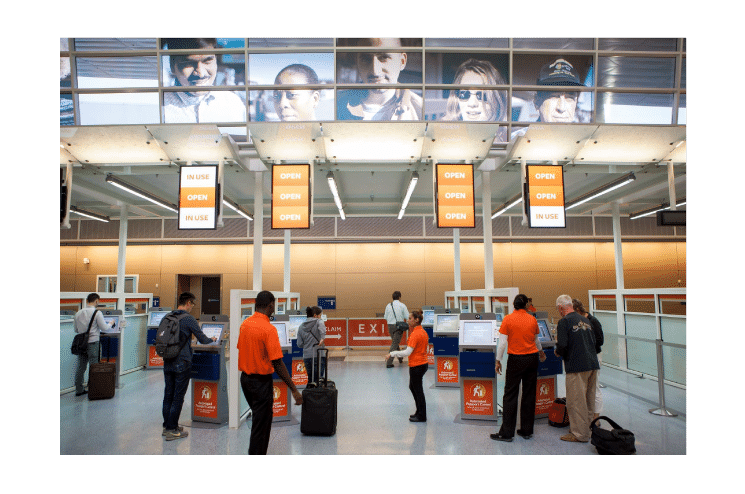
Organizations around the globe have been asked to deliver digital experiences that rival that of Amazon, while they operate with shrinking teams and much smaller budgets. The conversation around the “Self-Service Revolution” is everywhere and in every industry. While much of that buzz centers on the hospitality and ticketing sectors, a more profound shift is happening beneath the surface: the move toward Self-Service Identity Verification (IDV).
In 2026, “Identity Verification at the Edge” will be the expected standard. Whether it’s a patient checking into a hospital, a traveler crossing a border, or a banking customer opening a high-value account, the burden of “proving who you are” is moving away from the service desk and toward the kiosk.
However, moving identity verification to a self-service environment isn’t as simple as installing a camera and an algorithm. It is a complex orchestration of physical engineering and digital trust. To succeed in this revolution, organizations must look beyond the software and understand the physical realities of identity verification at the edge.
The Physics of a Digital Match
In a lab setting, biometric solutions are nearly flawless. But a kiosk doesn’t live in a lab; it lives in a sun-drenched airport terminal, a hospital corridor, or a high-traffic stadium concourse. To educate your stakeholders on identity verification at the edge, you must first understand that the quality of the hardware plays a critical role.
When planning an IDV deployment, there are three physical “Environmental Killers” that can cause a high-end biometric system to fail:
1. Ambient Lighting: Shadows, glare, and backlighting are the enemies of facial recognition. If a kiosk is placed facing a window, the “washout” can make it impossible for software to perform liveness detection. A properly engineered kiosk treats lighting as a controlled variable—using recessed LEDs or diffusers to normalize the user’s face regardless of the room’s conditions.
2. Angle of Attack: Identity verification requires a high degree of precision. If a camera is tilted too far up or down, the biometric “map” of the user’s face becomes distorted. Designing for the “average” user isn’t enough; the hardware must accommodate the 5th-percentile female and the 95th-percentile male, including those in wheelchairs, while maintaining a consistent sensor angle.
3. Sensor Harmony: A modern IDV “stack” often involves a camera, an OCR document scanner, and perhaps a fingerprint or palm-vein sensor. If these are placed haphazardly, the user experience becomes clunky and is degraded. The hardware must “guide” the user’s eyes and hands through the process using intuitive placement and visual cues like perimeter lighting.
Each of these is critical to ensuring a quality experience that validates user identities and combines speed, accuracy and ease of integration to empower organizations to deliver a secure, seamless user experience while future-proofing their identity infrastructure.
Government: The High-Assurance Frontier
Nowhere is the IDV revolution more visible than in the public sector. Government agencies are under immense pressure to reduce fraud while increasing accessibility for services like DMV renewals, passport applications, and benefit enrollments.
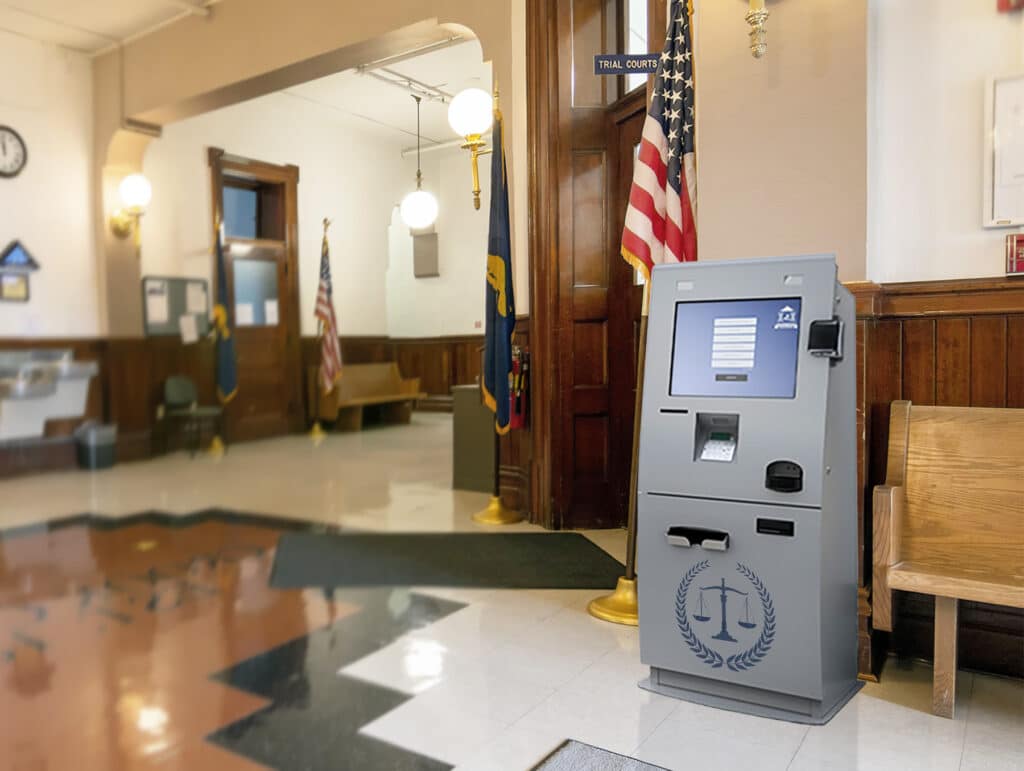
In this space, while privacy, consent and transparency are critical, equally important is the need for interoperability and security. Government deployments must often meet rigorous security standards, such as NIST Identity Assurance Levels (IAL2 and IAL3). These require more than just a selfie; they require high-fidelity document scanning and “Supervised Remote Identity Proofing” (SRIP).
• The DMV Shift: We are seeing a move from simple registration kiosks to “Full-Service Digital DMVs.” These units must handle the scanning of both sides of a driver’s license in a single step, verify the embedded security features of the card, and match the holder to their biometric profile, all without a clerk present.
• Accessibility as a Mandate: Government kiosks must serve everyone. This means engineering kiosks with motorized camera mounts that auto-adjust for height or implementing voice-guided “read-aloud” modes for the visually impaired.
• Trust and Reliability: For a citizen to feel comfortable scanning their passport or providing a fingerprint, the kiosk must be designed with “Physical Authority.” It needs to be a rugged, tamper-evident station that clearly conveys security and privacy at every turn.
The “Living Asset” Strategy: Planning for 2026 and Beyond
One of the most critical lessons in kiosk deployment is that peripherals evolve rapidly and include new features and the latest technology. While a high-quality steel kiosk enclosure is designed to last a decade or more, the “brains” inside—the scanners and cameras—are on a much shorter lifecycle.
In the IDV space, this is magnified. Government ID standards change, security protocols (like PCI or EMV) are updated regularly to prevent fraud, and biometric sensors are refreshed every 24 to 36 months.
To future-proof a kiosk investment, organizations should look for modular architecture. A modular design allows for “component swaps” rather than “kiosk replacements.” If a new liveness-detection camera becomes the industry standard in 2027, a modular kiosk allows you to swap just that sensor in the field. This “Lifecycle Management” approach protects the initial ROI and ensures the technology remains state-of-the-art without a total fleet overhaul.
Industry Applications: Beyond Government
The lessons learned in the government sector are quickly trickling down to other high-stakes industries where identity verification at the edge provides immense value:
• Healthcare: We are seeing a move toward “Patient Identity Excellence.” By using self-service kiosks to scan government IDs and match them to biometrics, hospitals are eliminating medical identity theft and registration errors.
• Fintech: Banks are deploying kiosks as “Micro-Branches.” For a customer to trust a machine with their financial identity, the hardware must provide a “fortress-like” sense of security while housing encrypted PIN pads and document scanners that detect forgeries.
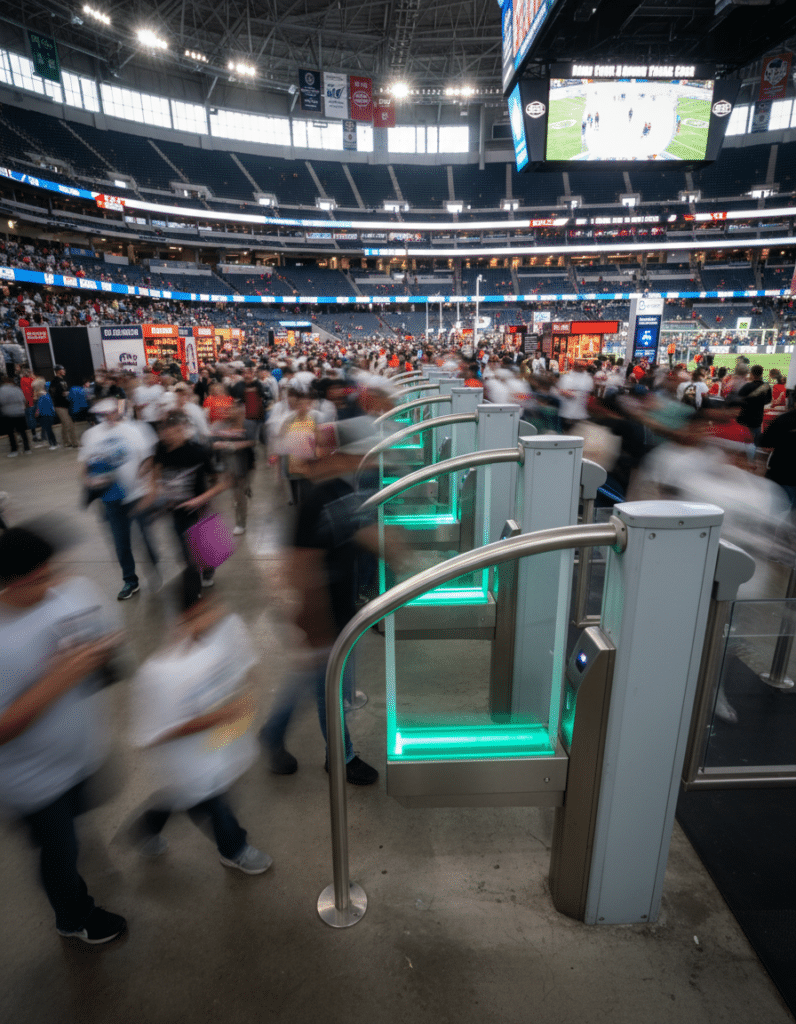
• Stadiums & Venues: The “Single Token” journey is the goal—where your face is your ticket and your age verification. The challenge here is throughput; the hardware must verify a fan in under two seconds while surviving the rigors of a high-volume concourse.
The Strategic Partnership: Bridging the Gap
The “Self-Service Revolution” is ultimately a partnership between the innovators who write the code and the engineers who build the interface. The most successful deployments are those where the hardware is viewed not as a “box,” but as a high-performance platform for the software.
When you partner with a veteran in the space, you aren’t just buying an enclosure; you are buying the knowledge of hundreds of previous deployments. You are buying the certainty that the lighting has been calculated, the ADA heights have been measured, and the thermal management has been tested.
As we look toward 2026, the question for enterprises isn’t if they will adopt self-service identity, but how they will ensure that their physical touchpoints are as smart, resilient, and adaptable to provide frictionless identity for a smarter, more agile experience. If your organization is looking at deploying identity verification in their next self-service application, contact us today to discuss your project.