A practical guide for operators evaluating self-service
Why Kiosk Economics Feel Unclear
Understanding kiosk ROI for entertainment venues requires looking beyond simple cost savings to how self-service impacts revenue capture, peak throughput, and operational resilience. Many attraction operators have been pitched self-service kiosks as a definitive path to higher revenue or lower labor costs. In practice, results vary widely.
That’s because kiosks are often evaluated as a standalone technology purchase, rather than as part of a broader operational system. In attraction environments, where demand fluctuates, staffing changes seasonally, and guest experience is critical, economic impact depends heavily on how they’ve been deployed.
Kiosks can deliver meaningful value, but only when they are aligned with how an operation actually functions day to day and over time.
The Three Ways Kiosk ROI for Entertainment Venues Influences Economics
In real-world attraction deployments, kiosks tend to affect economics in three primary ways:
- How demand is captured
- How efficiently transactions are processed
- How operational risk is managed
Understanding all three provides a more realistic picture than focusing on ROI projections alone.
1. Revenue Capture: Preserving Demand During Peak Moments
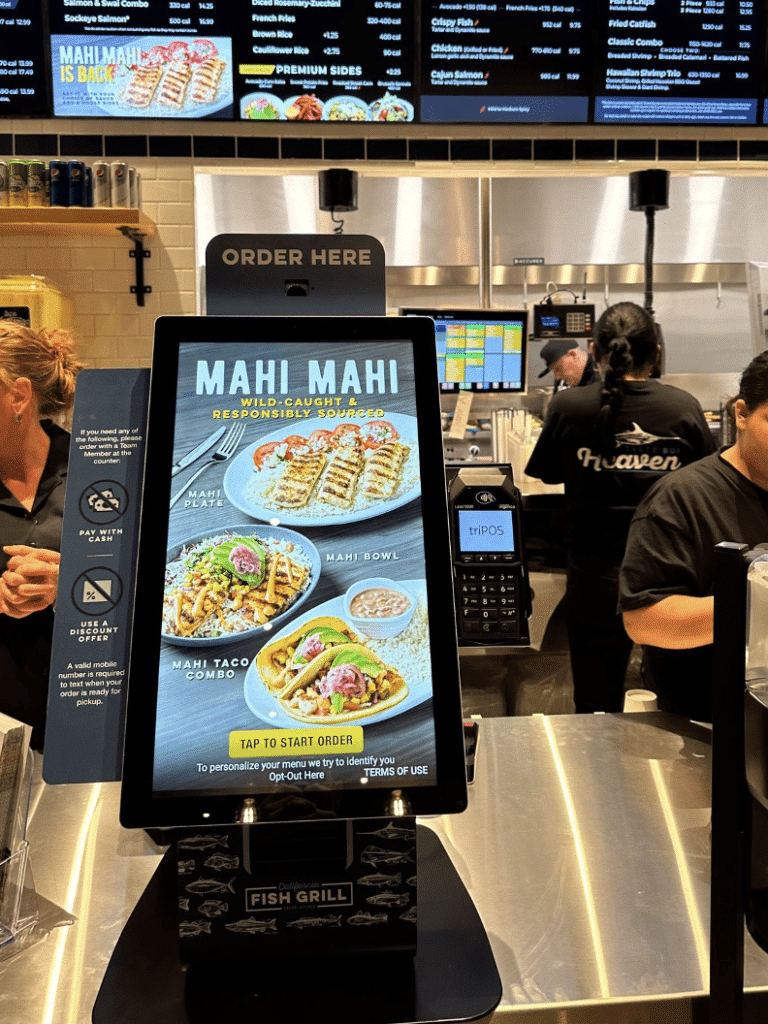
This is probably the most important takeaway. Self-service kiosks do not create demand. They influence how existing demand is captured—particularly during busy periods.
In attractions, revenue impact most often comes from:
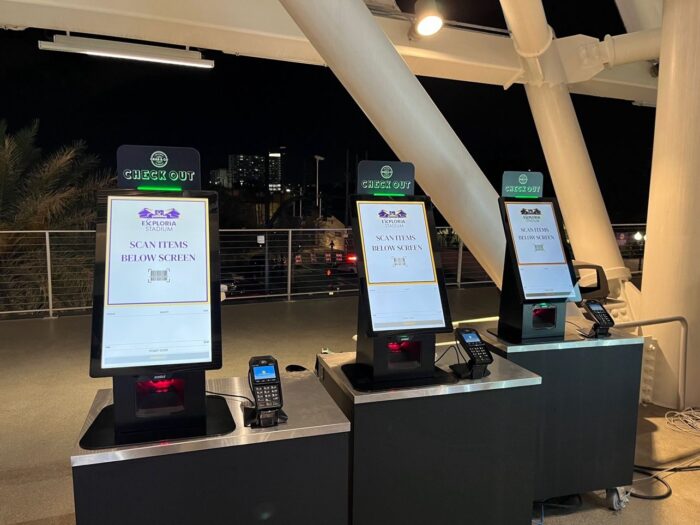
- reducing queue abandonment when lines grow long
- ensuring consistent presentation of ticket types, add-ons, or upgrades
- extending selling capacity during peak windows when staffing cannot easily scale
Kiosks are less effective when:
- transactions are complex or require some kind of explanation
- guests strongly prefer staff interaction
- kiosk placement disrupts natural guest flow
- exceptions still require frequent staff intervention
In practice, kiosks tend to reinforce what is already working operationally. They rarely compensate for unclear offerings or poorly designed guest journeys.
2. Cost Efficiency: Stability Over Staff Reduction
Labor considerations are central to kiosk discussions, but the economic impact is often misunderstood.
In most attraction environments, kiosks do not eliminate the need for staff. Instead, they:
- reduce pressure on front-line teams during peak demand
- shift staff time away from repetitive transactions
- improve throughput consistency
- reduce manual errors and rework
The most durable cost benefits typically come from operational stability, not headcount reduction. Kiosks are most effective when they help teams handle variability in demand without constant staffing adjustments.
3. Risk Management: The Often Overlooked Factor
In many attraction environments, the strongest economic case for kiosks is not upside—but risk reduction.
Kiosk ROI for entertainment venues must consider some key risks including the following:
- downtime during peak operating hours
- disruption to guest flow
- increased staff workload during system failures
- evolving security and accessibility requirements
- premature hardware replacement
Because kiosks operate in high-traffic, physically demanding environments and are expected to remain in service for many years, reliability and serviceability have a direct impact on long-term financials.
Avoiding disruption during peak periods often matters more than maximizing efficiency gains.
Where Kiosks Commonly Fall Short
Kiosks may struggle to deliver value when:
- transaction volume is low
- guest flows are unclear
- systems are heavily customized without clear ownership
- hardware is selected primarily on upfront cost
- support processes are not defined after go-live
Understanding these risks early can help operators avoid deployments that look promising but fail in practice.
Evaluating Kiosks More Effectively
Instead of relying solely on ROI estimates, attraction operators may find it more useful to ask deeper operational questions. For additional guidance, see our perspective on what to know before buying self-service kiosks for entertainment venues.
- How much of our demand is concentrated into peak periods?
- What happens if self-service goes down during peak?
- How quickly can systems be serviced or recovered?
- How long do we expect this deployment to last?
- Who is accountable for outcomes after launch?
These questions often reveal more about long-term economic impact than percentage-based estimates.
A Practical Way to Think About Kioks ROI for Entertainment Venues
The most successful self-service kiosk deployments begin with guest experience and operational reality.
When kiosks are evaluated as part of a broader system, including balancing revenue capture, cost efficiency, and risk management, they are more likely to deliver sustained value over time. For attraction operators, the goal is not to install kiosks, but to design systems that support guest experience and operational resilience through both peak and off-peak conditions.