Most organizations think self-service technology sells itself. Install the kiosk, and they will come. People will use it. That’s the assumption behind most rollout budgets.
It’s wrong.
You can buy the best kiosk on the market, put it in a great location, and still watch it sit mostly empty. And then a similar operation can hit 80% adoption or higher. The difference might be the technology, but it’s usually something else. It’s whether a person is standing next to it, actively helping people use it.
What Actually Drives Adoption
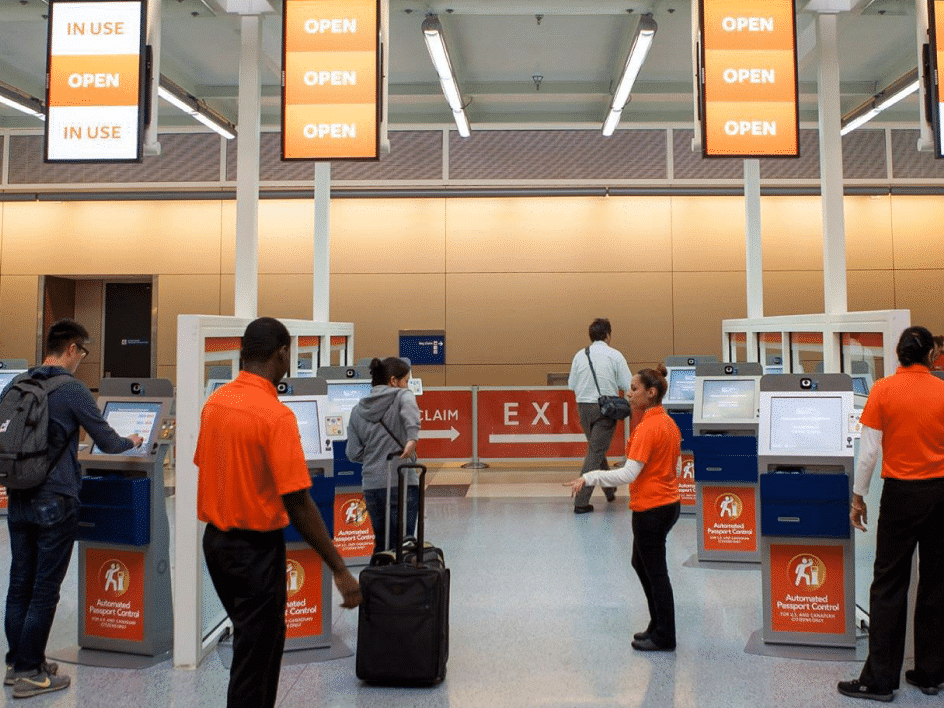
Here’s a fact worth sitting with: airports have staffed self-service check-in kiosks for 25 years, and they still keep staff stationed there. Not because the kiosks don’t work. Because airports learned that adoption doesn’t run on its own. It needs a person guiding travelers toward it, especially in the first few uses.
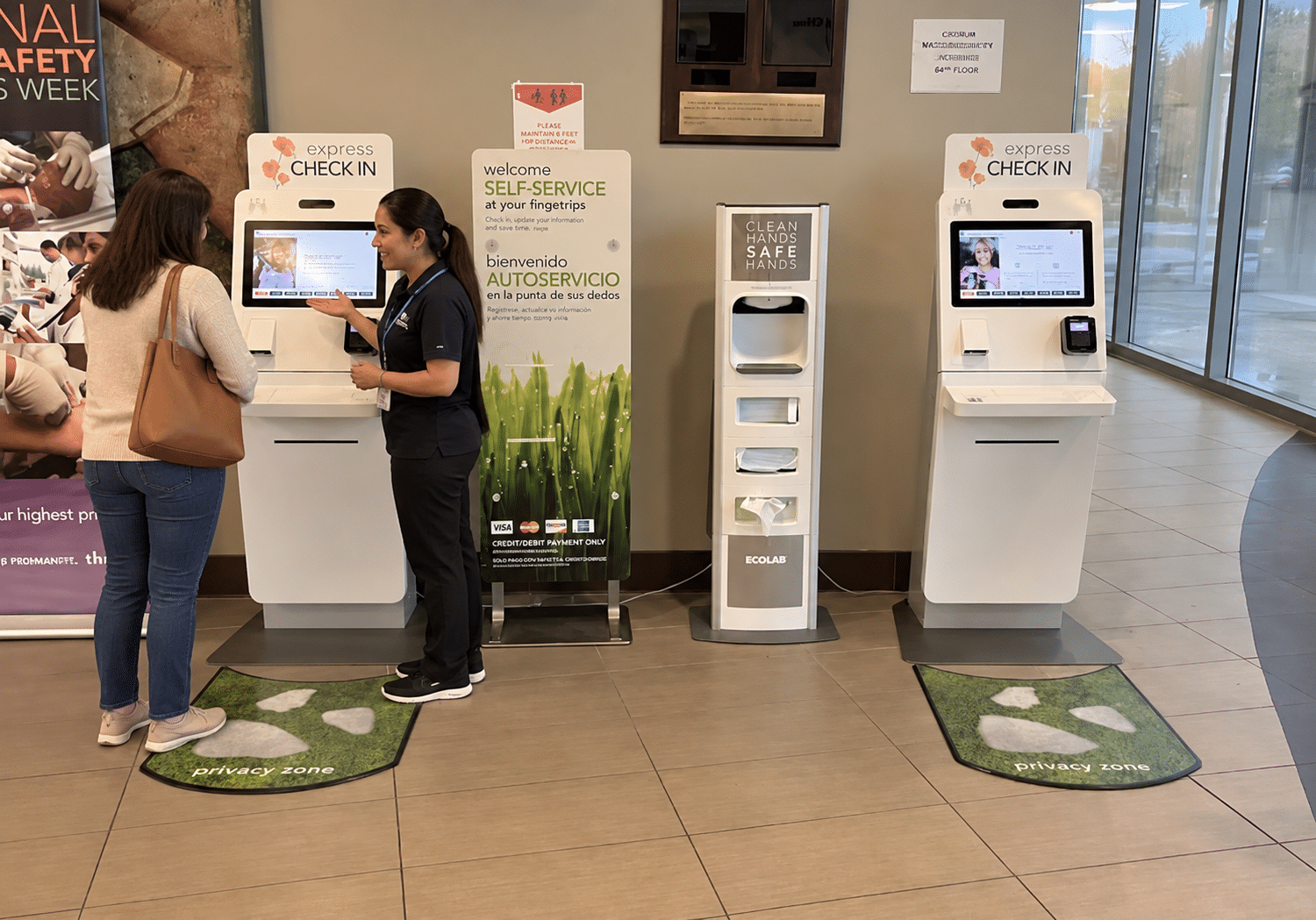
This pattern shows up everywhere self-service technology gets deployed well. In healthcare, one health system saw 80% of patients check themselves in using a kiosk at one facility. That result wasn’t driven by better hardware. It came from a staffing model built around one job: getting people to the kiosk and helping them use it, every time, not just during launch week.
The short version: adoption is a people problem before it’s a technology problem.
Why This Gets Overlooked
A common mistake is keeping a staffed counter running alongside the new kiosk, “just in case.”
It feels like the safe choice. Nothing about the old process changes. No one is forced to try something unfamiliar. Leadership can tell the board that both options are available.
But this setup tends to produce a predictable result. People default to the option they already know. Staff default to running the counter, because that’s the job they were trained to do. The kiosk sits there, underused, and the investment doesn’t pay off the way it should.
The bigger opportunity is on the other side of that counter: a person whose job is to actively guide people toward the kiosk, answer quick questions, and help with the first few steps until it becomes second nature. That’s a different role than staffing a counter. It’s not about waiting for someone to ask for help. It’s about walking over, pointing someone in the right direction, and staying close enough to step in the moment they hesitate.
This becomes even more important under pressure. Imagine a staffing shortage hits, and one person calls out sick. The instinct is to pull whoever is guiding people to the kiosk and move them to the counter to cover the gap. That feels responsible. It’s actually the opposite.
Here’s why: one person helping people use a kiosk can often support far more transactions per minute than one person handling everything manually at a counter. Pulling that person away doesn’t just slow down the kiosk. It removes your most efficient resource exactly when you need it most.
Organizations that treat this kind of support as a short-term launch measure tend to see the same story play out: usage grows while the support is there, then fades once it’s pulled back. Once that habit breaks, it’s hard to rebuild.
The Fix: Rethink the Role, Not Just the Technology
The organizations that get this right don’t think of the person near the kiosk as a backup plan. They think of that role as the thing that makes the kiosk work at all.
Call it a navigator, a greeter, an ambassador, but the title doesn’t matter. What matters is the job description. This person isn’t there to do the task for people who don’t want to try. They’re there to walk people toward the kiosk, answer quick questions, and help build a new habit.
This role also isn’t about adding headcount. It’s about using the staff you already have differently. One person supporting a kiosk can often help far more people in the same amount of time than one person handling each transaction manually. That’s not a cost. That’s leverage.
The organizations that protect this role, especially during busy periods or staffing gaps, are the ones that see adoption stick. The ones that treat it as a nice-to-have for the first few weeks are the ones whose kiosks quietly stop getting used.
This Isn’t Just a Healthcare Lesson
This pattern isn’t specific to hospitals or clinics. We’ve seen it play out in just about every industry we serve.
In government offices, a staff member actively directing visitors to a self-service station will get far more use out of it than a clerk who simply waits behind a counter for people to choose one option or the other.
In logistics and transportation, a dispatcher or yard employee who walks drivers through self-check-in will build faster adoption than a system that quietly sits next to the usual paper process.
In retail and hospitality, the same rule applies. A self-checkout lane or a hotel check-in kiosk only gets used consistently if someone is nearby, encouraging people to try it and helping with the first few attempts.
The lesson is the same across every one of these settings: if people can walk past your self-service option to reach a person instead, most of them will. The question isn’t whether to offer both. It’s whether your staff are positioned to guide people toward the self-service option, or simply positioned to catch the people who avoid it.
What to Ask Before Your Next Rollout
Choosing the right technology is only half the plan. The other half is deciding who will guide people toward using it.
Not who supports it when it breaks. Not who’s available if someone gets stuck. Who is actively, consistently guiding people to use it, especially in the first weeks after launch, and for as long as the program runs.
The technology makes self-service possible. The people around it make it work.
Working through a self-service rollout of your own? We’d welcome the conversation. Click here to connect.