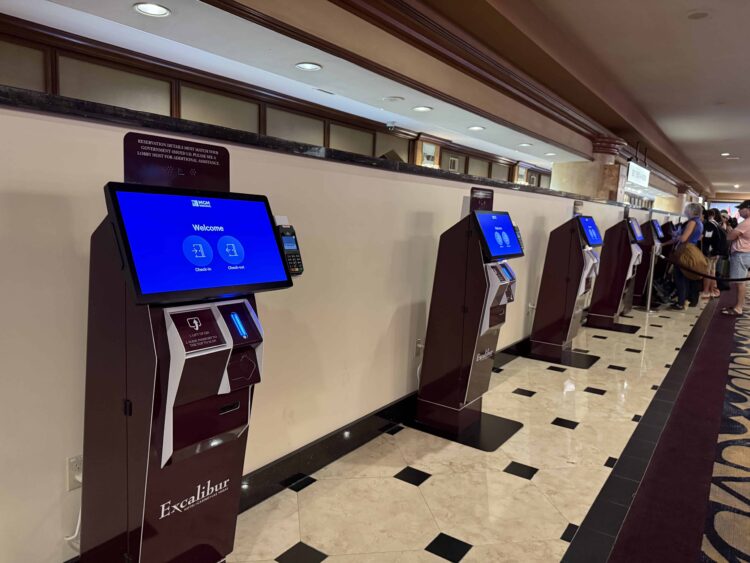
You already know the bad version. The touchscreen that won’t register your thumb. The menu that loops back on itself. The frozen progress bar while a line forms behind you and a staff member you were trying to avoid has to come rescue you anyway. In those moments, self-service kiosk customer experience feels exactly like what its critics say it is: a company handing you its own work and walking away.
But you also know the other version, even if you’ve never stopped to name it. You walk up to a gate at the airport, look at a camera, and you’re through — no boarding pass, no fumbling, no breaking stride. You tap a screen at a restaurant, customize an order three ways without explaining yourself to anyone, and the food arrives correct. You renew something with the government on the kiosk in less time than it took to find parking. In those moments, you don’t think “what a good self-service experience.” You don’t think about the technology at all. You just feel like things went smoothly. Like you were taken care of.
That second feeling is the whole game. And the industry has spent two decades measuring the wrong thing while chasing it.
We’ve been grading self-service on the wrong scale
For most of its history, self-service has been justified in the language of subtraction. Calls deflected. Staff hours saved. Cost per transaction driven down. Those are real benefits, and they’re not going away. But they describe what self-service takes off the company’s plate, not what it puts on the guest’s. Grade an experience purely by how much labor you removed, and you’ll happily ship something that’s cheaper and worse, because the scorecard never asked how it felt to use.
The operators pulling ahead right now figured out something counterintuitive: when you design self-service for the guest first, the efficiency shows up anyway, and you often get more of it. A faster, calmer, more dignified interaction isn’t the consolation prize you pay for in saved labor. It’s the thing that makes people actually use the channel, complete the task, and come back. Experience and efficiency stop being a tradeoff and start being the same investment.
Call the goal what it actually is: invisible hospitality. Hospitality, because the standard isn’t “did the transaction complete” but “did the person feel well hosted.” Invisible, because the highest compliment a self-service kiosk customer experience can earn is that the guest never noticed they were doing the work themselves.
What “well hosted” actually feels like at a screen
Strip away the hardware and the software and ask what a great host provides, and the list translates almost perfectly to self-service done right.
Speed, but really flow. A good host doesn’t make you wait, and doesn’t make you watch the machinery either. When Singapore’s Changi Airport moved to a fully biometric journey, check-in times dropped by roughly 30% and self bag-drop fell to about 30 seconds. The number that matters there isn’t the percentage, it’s that the friction the traveler used to feel isn’t there anymore.
Control without judgment. This is the quietly radical part. A kiosk doesn’t sigh when you customize your order six ways. A patient check-in screen doesn’t make you say your symptoms out loud in a crowded waiting room. A financial services kiosk doesn’t make you justify why you’re paying your balance late. Self-service, at its best, hands people a kind of dignity that even excellent human service struggles to: the freedom to do the thing on your own terms, at your own pace, with no audience. It’s no accident that across air travel, more than three-quarters of passengers now prefer self-service check-in where it’s offered. Given the choice, people reach for the experience that doesn’t watch them.
Recognition. A great host remembers you. The emerging generation of self-service does too. The gate that knows your face, the screen that greets you with your usual, the form that already knows who you are because you’re signed in. Done carelessly this is creepy; done well it’s the difference between a vending machine and a maître d’.
Reach. Hospitality means everyone is welcome, which makes accessibility not a compliance checkbox but a core feature. The interface that works for the traveler with a suitcase in one hand and a kid on the other hip is the same one that works for the person using a screen reader or standing at wheelchair height. Designing for the hardest case tends to make the experience better for everyone, the same way curb cuts ended up serving strollers and rolling bags as much as wheelchairs.
The trends worth watching, read through the guest’s eyes
Most coverage of self-service trends—including, honestly, plenty of our own recent writing, reads like a parts catalog: biometrics, conversational AI, personalization engines, edge computing. That framing is a little backward. None of those things matter to the guest as features. They matter more in the way those things make them feel.
Biometrics is really about subtraction. The point isn’t the iris scan; it’s everything the iris scan lets you stop carrying, stop typing, stop fumbling for. Dubai International’s smart gates have moved over 100 million passengers precisely because the best version of identity verification is the one you barely perform.
Conversational AI is really about being understood. The first generation of self-service made the human learn the machine’s menu tree. The next generation flips it: you say what you actually want, in your own words, and the system figures out the path. A kiosk that understands intent rather than matching keywords doesn’t just answer faster, it makes the guest feel met. That’s the difference between using a machine and being hosted by one.
Personalization is really about being known. The trend isn’t data collection; it’s the payoff of data used respectfully and the experience bending to fit you rather than forcing you to fit it.
None of these is interesting because it’s new technology. Each is interesting because of the human moment it improves. Keep that as the lens and the roadmap practically writes itself.
The craft that separates impressive from infuriating
Here’s where most self-service goes wrong, and where the genuinely good operators earn their reputation. Three principles do most of the work.
Never a dead end. The cardinal sin of self-service is the trap — the flow that gets you 80% of the way and then strands you with no person to turn to. Great self-service is built around the graceful handoff: the moment it senses you’re stuck, confused, or facing something genuinely complex, it hands you to a human with your context intact, so you don’t start over. In banking, where the channel shift is most complete, customers overwhelmingly say a consistent experience across app, web, and branch shapes who they’ll trust with their money. The lesson generalizes: self-service that can’t hand off isn’t self-service, it’s abandonment.
Design for the worst moment, not the average one. The average user, on an average day, can muddle through almost anything. The experience is defined by its hardest moments–the stressed traveler who just missed a connection, the patient who isn’t feeling well, the person who isn’t fluent in the interface’s assumptions. Design for them and the easy cases take care of themselves.
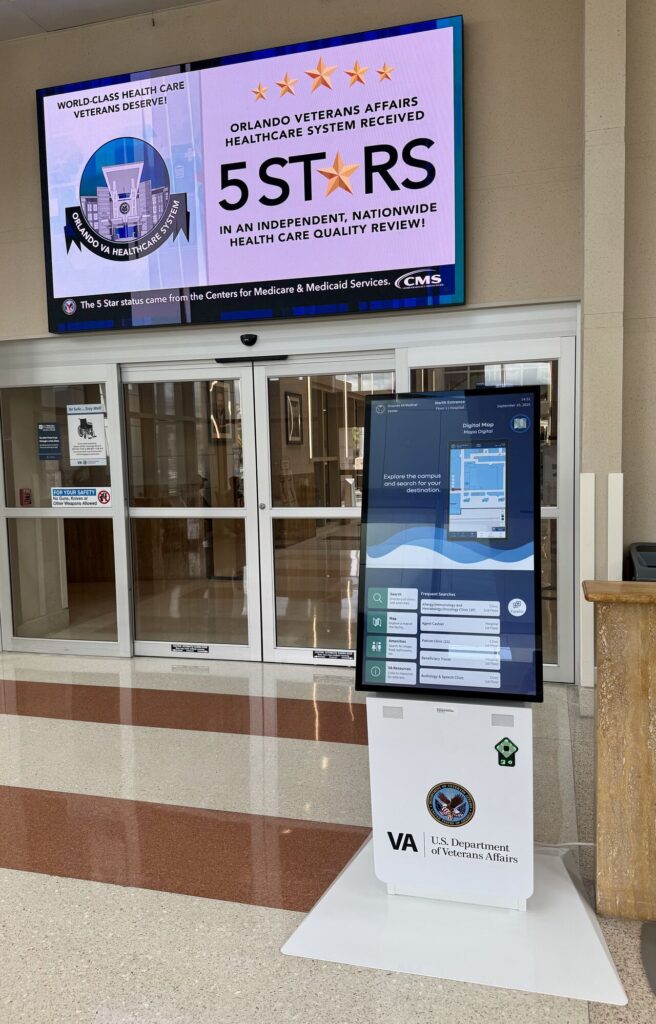
Treat the physical and the digital as one experience. This is the part the software-only crowd consistently forgets: in the physical world, the experience is the whole encounter. The height of the screen. The glare in afternoon light. Whether the card reader is where your hand expects it. Whether the thing looks like it belongs in a hospital lobby or an airport terminal or fights the space around it. A flawless interface bolted to badly considered hardware is still a bad experience.
Where this is heading
Put the pieces together and the destination comes into focus. Self-service is becoming less of a thing you operate and more of an environment that quietly does right by you; recognizing, understanding, adapting, and stepping aside the moment a human would serve you better. The screen stops being a barrier between the guest and what they want and becomes, in effect, a host: attentive, patient, available, and invisible.
The organizations that win the next decade of guest experience won’t be the ones that deflected the most calls. They’ll be the ones who understood that a kiosk is not a vending machine for your services. It’s the first thing that greets your guest, and often the only thing they’ll remember. The best of them are already designing for that standard, treating the hardware and the experience as a single act of hospitality. It’s the philosophy we build around at Olea Kiosks, and it’s the one worth holding every self-service kiosk customer experience to: not did it save us money, but did it make someone feel taken care of. Get that right, and the efficiency isn’t something you chase. It’s what happens when you stop chasing it and design for the guest instead.